Selected Past
-

Lewis Noble - Landscape in Motion, River and Sea
7 Jun - 5 Jul 2025 Lewis Noble's river and seascape paintings are deeply atmospheric, capturing the shifting moods and energy of natural water landscapes. Working in oils, mixed media and collage, Noble employs expressive brushwork and a rich, earthy palette to evoke the transient qualities and movement inherent in the subject.. His compositions often reflect... Read more -
Tom Benjamin NEAC - The Nowness of Everything
3 - 31 May 2025 The Nowness of Everything The title comes from Dennis Potter’s last interview, which he did with Melvyn Bragg on The South Bank Show in 1994. When I heard it, I felt that it encapsulated what I am trying to achieve in my paintings. 'At this season, the blossom is out... Read more -
Nick Bodimeade - The Height to which a Hawk Soars
5 - 26 Apr 2025 I was looking up the different meanings and uses of the word 'pitch' the other day, [check them out there are so many!] and came upon the above, which struck a chord. For years I have thought of the flight of a bird as a way of thinking about space... Read more -
Danny Markey - Passing Places
8 - 29 Mar 2025 All the paintings in this exhibition were painted outdoors in front of the subject and mostly within a short walk of my studio. When I last showed work at Campden Gallery I was living in south Wales and some of the paintings here date back to that time; images of... Read more -
Winter Exhibition
14 Dec 2024 - 1 Mar 2025 A changing exhibition of paintings, prints and sculpture by contemporary artists. Read more -
Jennifer Newman - What Lies Beneath
16 Nov - 7 Dec 2024 My practice has always been established on geological examination and contemplation. This exhibition considers the unique story of Robben Island in South Africa. This new exploration of layered history has been an adventure of discovery. Of secrets never shared, of a family tree not known. My work has often considered... Read more -
Paul Wadsworth - Festival
12 Oct - 9 Nov 2024 Throughout my life I have been involved in many festivals, from going to my first, Barsham fayre in Norfolk, when I was ten. I can still remember the sights sounds and smells and the magic was born. In the 1980’s I began to go to Glastonbury. I loved the spirit... Read more -
David Edmond - Verdant
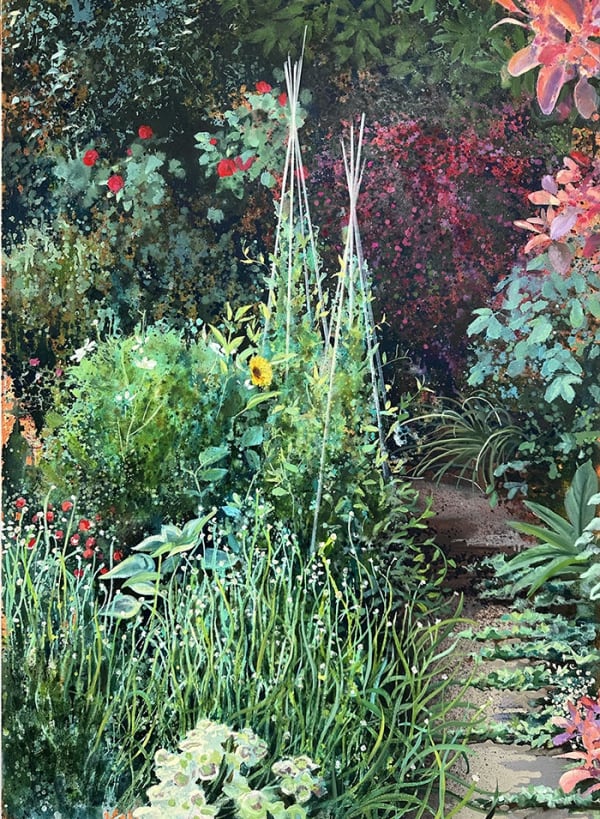
14 Sep - 5 Oct 2024 Verdant, the title of this exhibition, reflects the vibrant energy both of nature and these paintings. As a keen gardener and naturalist David Edmond captures the pleasure and solace that he gains from working his garden in South London and from walks in more rural areas. An initial exploration of... Read more -
Summer Exhibition
27 Jul - 31 Aug 2024 An exhibition of paintings, sculpture and original prints by some of our gallery artists. Read more -
Bridget Macdonald - The Year Turns
13 Jul - 17 Aug 2024 The works brought together for this exhibition are mainly of the landscape around the Malvern Hills where I live. The one exception is Gascony Pastoral, a distant view of the ancient hilltop town of Lectoure, between Bordeaux and Toulouse. The fertile rolling country and the ripening corn reminded me of... Read more -
Shadi Vezvaei - Will I end where I began?
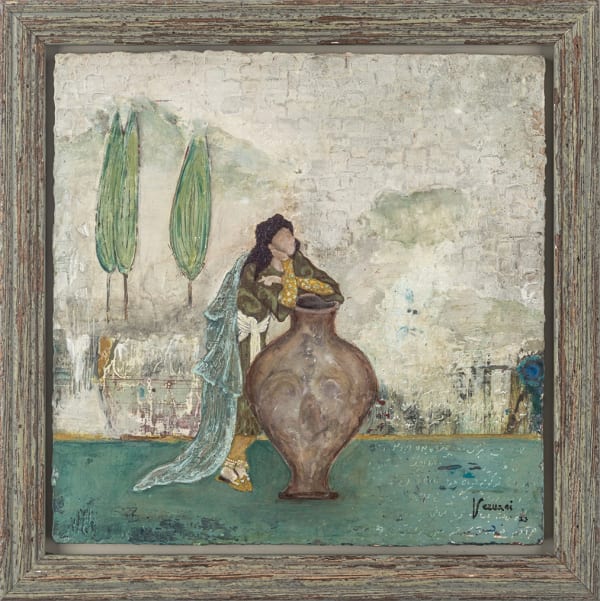
8 Jun - 5 Jul 2024 Shadi Vezvaei's artistic journey seamlessly merges her Persian heritage with our contemporary world. Her work offers a fresh perspective on the rich tapestry of Persian tradition. Rooted in the illustrious tradition of Persian miniature painting, Vezvaei's creations embody a contemporary aesthetic while paying homage to the timeless elegance of her... Read more -
David Atkins - Different Times, Other Places
4 - 25 May 2024 Wherever I travel in the world I take my sketch book and drawing materials with me. Over the years I have amassed a large collection of sketches that reflect not just the places I visit but the experiences I encounter. They are like a diary that have mapped out my... Read more -
Kristin Vestgård - An open story
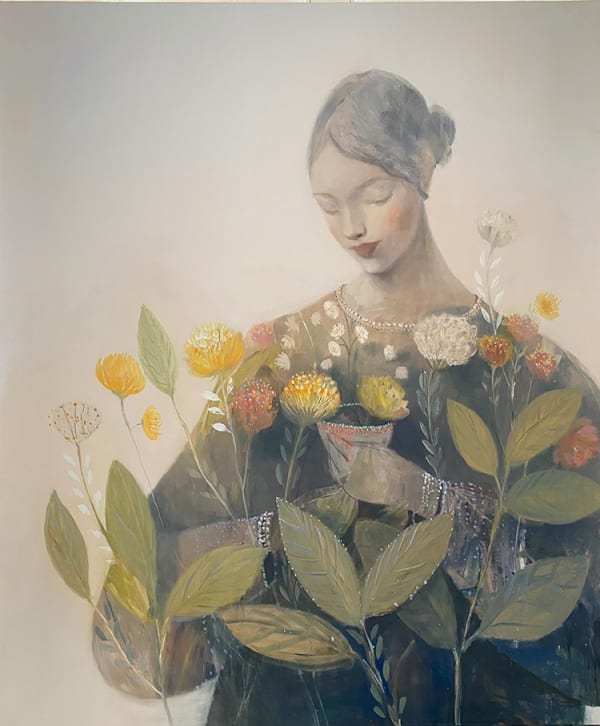
6 - 27 Apr 2024 My painting process is intuitive. I paint layers upon layers, scraping away whilst keeping marks until I find an atmosphere and an expression that I am searching for. I keep looking for a place where I can subconsciously belong. Drifting between what is real and fairy-tale, I find wordless poetry... Read more -
On Paper
9 - 30 Mar 2024 A group exhibition of art made on or with paper. The exhibition includes work using etching, aquatint, reduction woodcut, oil pastel, mixed media, collage, pigment, oil, collagraph and block print and watercolour. ARTISTS - DAVID ATKINS CAROLINE ATTAN SAMANTHA CARY MELANIE COMBER ROBBIE FIFE RALPH FREEMAN JEREMY GARDINER MARY GRANT... Read more